
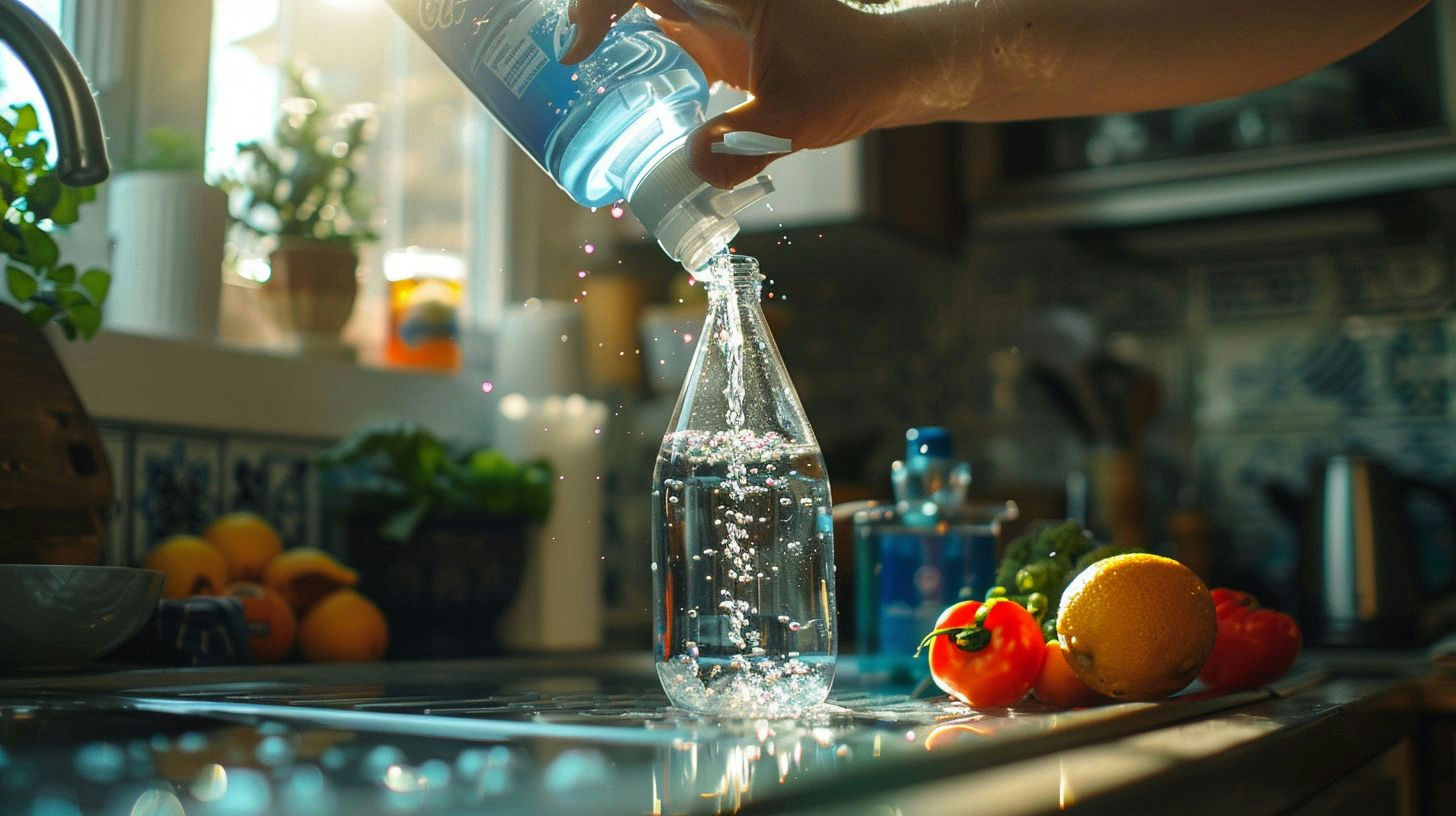
Dish soap does kill ants, but only the ones it soaks: a squirt of Dawn in a spray bottle wipes out the line of workers on the counter and leaves the nest that sent them untouched.
That gap matters most once ant bait is out. Workers that die on the way home never carry the slow-acting bait back to the queen, so a soapy spray beside a bait station undoes the one method built to reach the colony.
Soapy water also has to wet an ant to do anything at all, and the reason lies in the thin, waxy layer that keeps every ant from drying out.
Does Dish Soap Kill Ants?
Dish soap kills ants on contact, but only the ants the soapy water actually touches. It works on the workers you see on the counter or the patio, not on the nest they came from. To understand when a dish soap spray is worth using, it helps to know how it works and where it stops.
How Dish Soap Kills Ants
Dish soap kills ants by breaking down their protective outer layer. According to the University of Georgia Extension, the leading theory is that soap damages the insect's cell membranes and its cuticle (the waxy skin that keeps it from drying out), and that soapy water can also slip into the spiracles, the small breathing holes along the body. The ant dries out or cannot get enough oxygen.
The key limit is that soap only works when it touches the insect's body. Spraying soapy water on a spot where no ants are walking does nothing, according to the same source. Small, soft-bodied insects are the easiest to kill this way.
Why Dish Soap Does Not Kill the Colony
Dish soap does not kill the colony because the queen and the young ants never leave the nest, and the soap never reaches them. Iowa State University Extension notes that soap sprays wash away easily, and UC IPM notes they leave no residual toxicity, so once the spray dries, the next wave of workers walks through untouched.
Even stronger methods poured straight into a nest fall short. Health Canada says that boiling water and detergent poured down a nest only temporarily reduce the population of a colony, and the University of Saskatchewan notes that boiling water can kill a lot of ants in the nest but will not kill the queen. As long as the queen lives, the colony keeps producing workers.
Is Dawn Better Than Other Dish Soaps?
Dawn is not proven to kill ants better than other dish soaps. Iowa State University Extension names Dawn and Palmolive together and explains that dish soap is really a detergent, not a true soap, and that its effect on insects is "limited and highly variable." No reliable source appears to show a difference between brands.
The old claim that the smell of Dawn attracts ants to their death is not supported either. Use whatever liquid dish soap you already have.
Does Dish Soap Repel Ants?
Dish soap does not repel ants for long, but it does erase the trail they follow. Health Canada explains that a scout ant that finds food leaves a scented trail for other workers to follow. UC IPM (University of California) says soapy water removes that scent trail, especially when you clean thoroughly at the spot where ants come in. Once the trail is gone, the ants lose their road map until a new scout finds the food again.
How to Make a Dish Soap Ant Killer Spray
A dish soap ant killer spray is just water with a few drops of liquid dish soap in a spray bottle. There is no need for an exact recipe, because the spray only needs to wet the ants it hits.
What You Need
A dish soap ant killer needs only three things:
- A clean spray bottle
- Water
- Liquid dish soap (Dawn or any other brand)
A sponge or cloth is also handy for wiping trails after you spray.
How to Mix It
Mixing a dish soap ant spray takes a minute:
- Fill the spray bottle with water.
- Add a few drops of liquid dish soap, the amount the University of Saskatchewan suggests for washing away ant trails.
- Close the bottle and swirl it gently so it does not foam up too much.
- Write "soapy water" on the bottle so nobody mistakes it for something else.
More soap is not better. A heavy mix leaves a sticky film on counters and floors, and Iowa State notes that dish soap is more likely than insecticidal soap to damage plants.
Should You Add Vinegar?
Adding vinegar to a dish soap spray is optional and does not make it a colony killer. Penn State Extension suggests wiping ant trails with either soapy water or a vinegar and water solution, so both do much the same cleanup job. Nebraska Extension adds that home deterrents such as vinegar are unlikely to be a long-term cure and have little scientific backing. If you want to try it anyway, our guide on whether vinegar kills ants explains what to expect. Keep vinegar mixes off natural stone (see the safety section below).
Storing the Spray
Storing your dish soap spray safely is simple: keep it in its labelled bottle, on a high shelf or in a closed cabinet, away from children and pets. Mix a fresh bottle when you need one, rather than keeping old batches around.
How to Use Dish Soap Against Ants
Dish soap works best against ants as a cleanup tool: wash away the ants you see and erase their trails, then deal with the nest. Here is where it helps and where it does not.
Spraying Ants You Can See
Spraying ants you can see is the most direct use of a dish soap spray. Spray the ants until they are wet, wait a moment, then wipe them up with a damp cloth or paper towel, which UC IPM says may work as well as an insecticide spray. This clears a counter or a windowsill quickly, but expect more ants later if the colony is still active nearby.
Wiping Ant Trails
Wiping ant trails with soapy water is where dish soap does its most useful work. UC IPM recommends cleaning up invading ants with a sponge and soapy water as soon as they come in, to remove the scent trail they leave behind. Health Canada notes that ant trails usually run along baseboards and the carpet edge along walls.
Before you wipe, follow the trail to see where the ants are getting in, as Penn State Extension suggests. That spot is the one to clean most thoroughly, and later to seal. Outside, the University of Saskatchewan suggests using a watering can of water with a few drops of dish soap on patios, sidewalks and driveways, letting it dry, and repeating as needed.
Soapy Water on Outdoor Nests
Soapy water poured on an outdoor nest can knock back the ants near the surface, but it rarely finishes the colony. Penn State Extension lists soaking outdoor nests with hot, soapy water as one option, while Health Canada describes boiling water and detergent as a way to temporarily reduce a colony. Boiling or scalding water also kills grass, flowers and roots, so pour carefully. For lasting results on mounds in the lawn, see how to get rid of ant hills.
Why You Should Not Spray Soap Near Ant Bait
Spraying soap near ant bait undoes the bait. Health Canada warns: "Do not use chemical sprays to kill ants while using a bait system, or the bait system will not work." Bait only works if workers live long enough to carry it back to the nest, so wiping or spraying the trail that leads to a bait station cuts off the delivery route. If you have set baits, leave the ants on that trail alone.
Is a Dish Soap Ant Killer Safe?
A dish soap ant killer is generally lower risk than insecticides, and UC IPM notes that soap products leave no residual toxicity, but it is not harmless to pets, plants or stone. A few precautions keep it that way.
Pets
Pets can get sick from dish soap if they swallow it. Pet Poison Helpline lists liquid dish soap among detergents and explains that pets usually get exposed by chewing a container or walking through a spill. Swallowing it can cause drooling and vomiting, and the foam can be inhaled into the lungs. Let sprayed areas dry before pets walk on them, keep the bottle out of reach, and call your veterinarian if your pet swallows soap and seems unwell. For other options, see our guide to pet-safe ant killers.
Children
Children are safest when the spray bottle is clearly labelled and stored out of reach, like any other cleaning product. Wipe up soapy residue on floors and low surfaces, since it can make them slippery.
Ants on Plants
Ants on plants are not a good reason to reach for dish soap. Iowa State University Extension says dish soap is much more likely than insecticidal soap to damage plants (phytotoxicity), and the University of Georgia Extension warns that soap sprays can burn leaves, especially on stressed plants or when temperatures are over 90°F (about 32°C). Test a small area first if you try it.
Registered insecticidal soap is not an ant product either. In Canada, Safer's Insecticidal Soap (PCP 14668) is labelled for pests such as aphids, mealybugs, spider mites and whitefly, not ants. Ants on plants are often tending aphids, and the University of Saskatchewan notes that aphids can be washed off with plain water, no soap required.
Stone Countertops
Stone countertops are fine with a light soapy water wipe, but not with vinegar. Natural stone contains calcium carbonate, which reacts with acids like vinegar and lemon juice, and stone-care manufacturers warn this can etch the surface and damage the sealer. If your counters are stone, leave the vinegar out of your ant spray.
Homemade Pesticides in Canada
Homemade pesticides are something Health Canada advises against: it says to never make your own pesticides because of the risks to your health, and to use registered products, which you can recognize by the Pest Control Products (PCP) number on the label. Plain soapy water used to clean surfaces is ordinary cleaning, but avoid stronger home mixes, especially ones made with borax or boric acid. Health Canada specifically says not to make homemade pesticides with boric acid, and the University of Saskatchewan calls borax an extremely dangerous home-made pesticide for children and pets. If you want a borax product, use a sealed, registered bait station and read our guide on using borax to kill ants.
What Kills Ants Better Than Dish Soap?
Slow-acting ant baits work better than dish soap because worker ants carry them back to the nest, where UC IPM notes the entire colony, including queens, can be killed. Once you have cleaned up the ants you can see, these are the options that actually end the problem.
Ant Baits
Ant baits work where dish soap cannot. Worker ants eat the bait, carry it home and share it, and UC IPM explains that the entire colony, including queens, can be killed this way, which is why the bait must act slowly. UC IPM says it can take 5 to 10 days to see fewer ants, and full control may take several weeks or more.
Health Canada recommends placing bait stations directly on the ants' path, out of reach of children and pets, using plenty of stations, trying two different baits at the same time, and keeping baits available for at least two weeks. Penn State Extension suggests enclosed, tamper-resistant bait stations with ingredients such as boric acid or fipronil. Do not panic if you see more ants at first: bait makers and Mississippi State Extension note that activity often rises before it drops. For tested products, see our picks for the best ant killer.
Diatomaceous Earth
Diatomaceous earth is a dry powder you sprinkle where ants travel, a natural option sold for ant control. Health Canada describes it as non-toxic to humans and pets but advises not to inhale the dust when applying it, and the University of Saskatchewan suggests it near doorways only if you do not have pets or small children.
Carpenter Ants
Carpenter ants need more than soapy water, because their nests are inside wood. Health Canada notes that they can cause structural damage to homes, and that piles of sawdust may mean you have carpenter ants. Health Canada also notes that carpenter ants are generally larger than other species. If you suspect them, read how to get rid of carpenter ants.
Pharaoh Ants
Pharaoh ants are tiny yellowish ants that often nest indoors, and sprays can make them worse. Alberta Health Services advises against insecticidal sprays because they can make the colony bud, or split into new nests, and the City of Calgary warns that some spraying can make ants appear in more places. If tiny pale ants are showing up in several rooms, skip the soap spray and read our pharaoh ants guide.
Ant Prevention
Ant prevention keeps the next scout from finding a reason to come in. Health Canada recommends storing sweet and greasy foods in glass jars with rubber seals or plastic containers with snap-tight lids, keeping counters clean, rinsing containers before recycling, and sealing visible cracks in the foundation and exterior walls. A quick soapy wipe of counters each evening fits right into that routine.
When to Call a Pest Control Professional
Calling a pest control professional makes sense when ants keep returning after a few weeks of baiting, when you see signs of carpenter ants, or when tiny ants are spreading through several rooms or units. A licensed pest control professional can usually identify the species and treat the nest directly. You can get a quote from a recommended local exterminator through Pest Agent's referral form. For other kitchen-cupboard options, compare our homemade ant killers and cinnamon for ant control, or browse the ant hub.
Need help?
Get a free quoteFrequently asked questions
Does Dawn dish soap kill ants instantly?
Dawn can kill the ants it soaks on contact, because it can damage their outer layer and block their breathing holes. It only works on the ants you spray, though. The colony can keep sending workers, and UC IPM notes spraying ants indoors will not prevent more from entering.
Can I spray dish soap on an ant hill?
You can, and hot soapy water poured on a nest can kill some of the ants near the surface. Health Canada describes this as a way to temporarily reduce a colony, not eliminate it. The queen is usually deeper in the nest and often survives, so a bait usually works better for lasting results.
Does dish soap keep ants away?
Not for long. Soapy water removes the scent trail ants follow, so they lose their path for a while. Once it dries, it leaves nothing behind, and a new scout can start a fresh trail to the same food.
Is dish soap spray safe for dogs and cats?
A diluted dish soap spray is low-risk once it has dried, but pets should not lick or drink it. Swallowing detergent can cause drooling and vomiting, and the foam can reach the lungs. Keep pets away until surfaces are dry, store the bottle out of reach, and call your veterinarian if your pet swallows some and seems unwell.
Does vinegar and dish soap kill ants?
A vinegar and dish soap spray kills the ants it soaks, just like soapy water alone. The vinegar mostly helps clean the scent trail, as soapy water does according to UC IPM, and it does not reach the colony. Avoid using it on natural stone counters, which acids can etch.
Dealing with ants right now?
Answer a few short questions and we pass your request to a pest control company ranked near you.
Get a free quote