
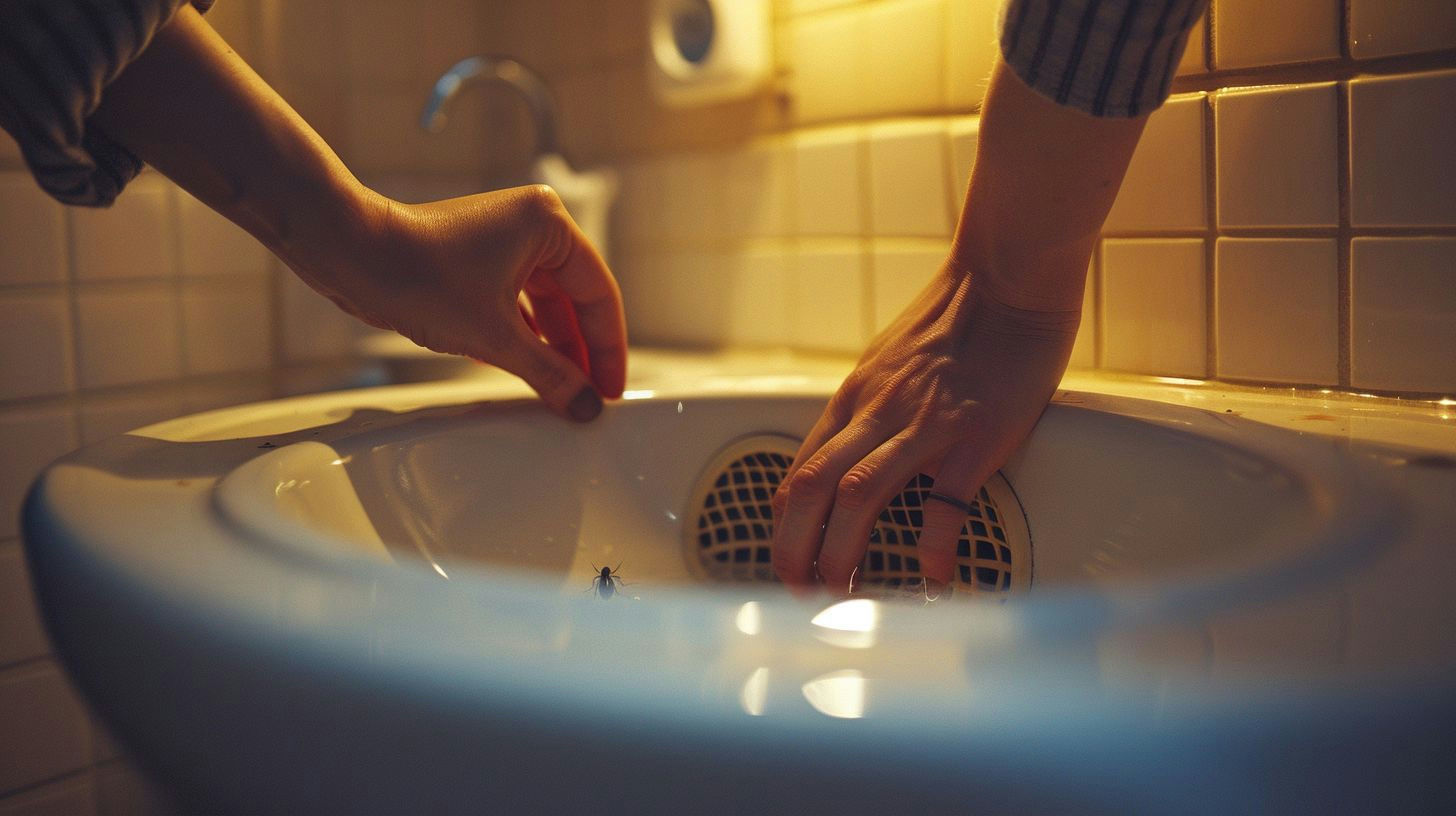
Roaches in a drain trigger the same reflex in most people: a kettle of boiling water or a splash of bleach, poured straight down the pipe. That may kill the roaches it reaches, but the way in stays open, and the next ones come up the same route a few nights later.
The pipe itself is rarely the whole story. Roaches gather at a drain for the damp and the food scraps caught along its edge, and some species use the plumbing as a road up from the sewer once the water in the trap has dried out.
Why Are There Roaches in Your Drain?
Roaches in your drain are there for water, food scraps and shelter, and some species use drains as a road up from the sewer. Health Canada notes that cockroaches are drawn to the warm, damp conditions of kitchens, bathrooms, basements and plumbing areas. A drain offers all three things a cockroach needs in one dark spot.
Can Cockroaches Come Up Through the Drain?
Cockroaches can come up through the drain, especially when the water in the drain trap is gone. Every sink, tub, shower and floor drain usually has a trap: a bend in the pipe that holds water and helps block sewer gases. According to Texas A&M AgriLife, cockroaches often live in sewers and can enter buildings through floor drains, and rarely used floor drains tend to be the most vulnerable because their traps dry out. UC IPM adds that American cockroaches come in from sewers especially when pipes are damaged, screens are missing or water traps in drains are faulty.
Which Cockroaches Live in Drains?
The cockroaches that live in drains are mainly American and Oriental cockroaches. Penn State Extension describes American cockroaches in floor drains, pipe chases, bathtubs and sewers, with adults usually about 1.5 inches (about 4 cm) long. Penn State notes that in northern regions they are often tied to steam heat tunnels and large institutional buildings rather than single homes. Oriental cockroaches are shiny black or dark brown roaches that live in cool, damp places such as basements and drains (UC IPM, University of Kentucky).
The German cockroach, one of the most common household cockroaches in Canada, does not usually come from the sewer: it tends to live and breed indoors (UC IPM). It still loves the area under kitchen and bathroom sinks, and it travels between rooms and apartments along pipes. Health Canada gives its size as 1.3 cm to 1.6 cm. If you are not sure which roach you found, our cockroach identification guide can help.
What Attracts Cockroaches to Drains?
Cockroaches are attracted to drains by moisture first, then food. UF/IFAS calls water "the most important factor in cockroach survival," and drains often stay damp even when the rest of the room is dry. Texas A&M AgriLife points out that food waste can build up in and around floor drains, often in the cracks at the drain's edge, where regular cleaning may miss it. For the full list of what draws roaches into a home, see what attracts roaches.
Cockroaches in the Bathroom Drain
Cockroaches in the bathroom drain are often Oriental or American cockroaches that climbed up through the plumbing. UC IPM notes that Oriental cockroaches may be found trapped in porcelain sinks or tubs after falling in or climbing up through damaged drain pipes. So a roach stuck in your tub in the morning may well have come up the drain during the night. Bathrooms are also warm and damp, which Health Canada lists among the conditions cockroaches look for.
Are Roaches From the Drain a Health Risk?
Roaches from the drain are a hygiene risk because of where they have been. Health Canada warns that cockroaches can contaminate food and spread disease after travelling through garbage or sewers. Wipe down any sink, counter or dish a drain roach has walked on, and keep food away from the drain area.
How Do You Know Cockroaches Are Coming Up the Drain?
Cockroaches coming up the drain show up where the drain opens: in sinks, tubs, showers and around basement floor drains, mostly at night. Before you treat the whole house, confirm the drain is really the entry point. Our guide on where roaches come from covers the other common routes.
Night Sightings in Sinks and Tubs
Night sightings in sinks and tubs are the first clue. Health Canada notes that cockroaches are most active at night, so turn on the bathroom or kitchen light quietly after dark and look at the drain, the tub and the floor drain. Roaches that scatter toward the drain opening, or that you find stuck in a dry tub in the morning, point to the plumbing.
The Tape Test
The tape test is a simple way to check a specific drain. Terminix suggests placing clear tape, sticky side down, over the drain opening overnight, leaving a small gap for airflow, and checking it in the morning. A roach stuck to the tape, or under it, tells you that drain is in use.
Sticky Traps Near the Drain
Sticky traps near the drain show you where roaches are travelling. UC IPM calls sticky traps the best way to detect and monitor cockroach populations and notes that cockroaches are often caught within the first 24 hours. Place traps flat against the wall next to floor drains, under the sink and behind the toilet, and check them daily for several days. If the traps closest to the drain catch the most, the drain is your main problem.
How to Stop Cockroaches From Coming Up the Drain
Stopping cockroaches from coming up the drain means keeping water in every trap, covering the openings and sealing the gaps around the pipes. These steps work for kitchen sinks, bathroom drains and basement floor drains alike.
Keep Drain Traps Full
Keeping drain traps full is the most important step. A trap full of water can act as a physical barrier between your home and the sewer line, and Terminix describes the trap as blocking both sewer gases and pests from coming back up. Texas A&M AgriLife recommends flushing rarely used drains weekly to keep water in the trap.
- Run water for a moment in guest bathroom sinks, unused showers and laundry tubs every week.
- Pour water into basement floor drains, which dry out easily because they are rarely used.
- For drains you almost never use, a Toronto plumbing company suggests pouring in water followed by a little cooking oil: the oil floats on top and can slow evaporation.
Cover Drains at Night
Covering drains at night blocks roaches that are already in the pipe. Health Canada recommends putting a fine mesh screen over open pipes and drains to reduce access to your home. Close the sink and tub stoppers before bed, or fit a metal mesh drain cover that lets water through but not insects. Texas A&M AgriLife notes that screens can clog where food scraps go down the drain, so it helps to clean kitchen drain covers often.
Use a Trap Guard on Floor Drains
A trap guard is a one-way insert for floor drains that lets water flow down but closes when the drain is not in use. Texas A&M AgriLife lists these trap guards as a way to help reduce pest problems in floor drains. They are a good fix for a basement floor drain that you keep forgetting to refill. Check that the guard fits your drain size, and keep refilling the trap anyway.
Seal Gaps Around Pipes
Sealing gaps around pipes closes the route many roaches use, because the hole where the drain pipe goes through the wall or floor is often wider than the pipe. Health Canada recommends sealing and caulking all cracks, crevices and pipe openings. UC IPM notes that an adult German cockroach can hide in a crack 1/16 inch wide (about 1.6 mm), so even small gaps count.
- Empty the cabinet under the sink and use a flashlight to look at where each pipe enters the wall or floor.
- Fill large holes first with tightly packed steel wool or copper mesh.
- Seal over the filler and around smaller gaps with silicone, caulk or expanding foam.
- Do the same behind the toilet, around the tub spout and around basement pipes.
In an apartment, these gaps matter even more: the University of Kentucky notes that caulking openings where pipes pass through walls and floors reduces cockroach movement between units.
Clean Food Buildup From Drains
Cleaning food buildup from drains takes away the reason roaches linger there. It helps to empty sink strainers often and not leave water standing in the sink for long periods (UF/IFAS). For floor drains, Texas A&M AgriLife suggests using a butter knife or putty knife to scrape out the food and grime often packed in the cracks at the drain's edge, and checking under cracked tiles next to the drain. Kitchen habits such as storing food in sealed containers and taking out the garbage daily are covered in our guide to preventing cockroaches.
Fix Leaks Under the Sink
Fixing leaks under the sink removes the water roaches drink when the drain itself is dry. Health Canada suggests repairing leaky faucets and pipes, wrapping or insulating pipes that drip with condensation, and ventilating or dehumidifying damp rooms. Check the cabinet under each sink for drips, wet wood or a damp floor, and dry it out.
What Can You Pour Down the Drain to Kill Roaches?
Pouring something down the drain rarely solves a roach problem, because it does not fix the dry trap or the gap that lets them in. Here is what each common option really does.
Bleach
Bleach may kill some roaches on contact, but it is not a solution. Terminix notes that it is not recommended for regular use, and it only touches the roaches it reaches at that moment.
Boiling Water
Boiling water does not reach the roaches hiding deeper in the pipes. Terminix warns that it may not reach deeper nesting areas and could damage certain types of pipes over time, so it is usually not worth the risk to your plumbing.
Baking Soda and Vinegar
Baking soda and vinegar have little to no effect on cockroaches, according to Terminix. The fizzing mix can freshen a drain, but it is unlikely to kill or repel roaches. Health Canada also cautions that homemade pest remedies are not tested for safety or effectiveness.
Drain Foams
Drain foams are insecticide products made to coat the inside of drain pipes, and some contain insect growth regulators that stop young insects from developing. Many target drain flies as well as roaches. Before you buy one in Canada, check that the label lists cockroaches and shows a Pest Control Products (PCP) number, which means Health Canada has registered it.
Cockroach Baits
Cockroach baits are the most reliable product for roaches that hang around your drains. Health Canada notes that bait stations come in tamper-proof containers and kill cockroaches about 48 to 96 hours after they eat the active ingredient. UC IPM adds that a bait program may take 7 days or longer to show fewer roaches, and warns that sprays can scatter roaches to other areas without killing them. Place bait stations or gel under the sink and near floor drains, out of reach of children and pets, and along walls, as UC IPM suggests. For tested options, see the best cockroach killer; scents and plant oils are covered separately in our guide to cockroach repellents.
Boric Acid Rules in Canada
Boric acid is no longer sold as a loose dust for home use in Canada. Health Canada's re-evaluation of boric acid, published in 2016, cancelled domestic dust and granular products: their sale stopped in 2018 and their use had to end in 2019. Sealed bait stations and gels are still allowed, and their labels must say to use them only in areas children and pets cannot reach. Health Canada also warns that homemade pesticides may pose health and safety risks, so skip the old advice to sprinkle boric acid around drains.
When Should You Call a Plumber or a Pest Control Professional?
Calling a plumber makes sense when the drain itself is damaged, and calling a pest control professional makes sense when roaches are breeding inside your home. Sometimes you need both.
Signs of a Damaged Drain
Signs of a damaged drain include roaches that keep appearing even though every trap is full and covered, a sewer smell in the basement, or a floor drain that never holds water. Penn State Extension notes American roaches often come up floor drains and sewer pipes; UC IPM links this to damaged pipes and faulty traps no insecticide can fix. A plumber can run a camera down the drain line to pinpoint a cracked pipe or a broken trap.
Signs of an Indoor Infestation
Signs of an indoor infestation include roaches in rooms far from any drain, roaches out in daylight, and egg cases glued under furniture or inside appliances. At that point the drain is no longer the only source. UC IPM notes that one German cockroach female and her offspring can produce many thousands of cockroaches in a year. Review the signs of a cockroach infestation, learn what a cockroach exterminator does, and if you want help, you can get a quote from a recommended local exterminator through Pest Agent's referral form. Visit the cockroach hub for more guides.
Apartments and Shared Plumbing
Apartments and shared plumbing need a building-wide approach, because roaches move between units along pipes. The Government of Manitoba advises tenants to tell their landlord right away, and Penn State Extension notes that store chemicals used on your own may disperse cockroaches, making control difficult. Ask your landlord whether the shared drain lines and neighbouring units are being checked too.
Frequently asked questions
Do cockroaches live in sewers?
Yes. American and Oriental cockroaches can often live in sewers, storm drains and damp basements. They can reach your home through drains when the water in the trap dries out or when pipes are damaged.
Does bleach kill roaches in drains?
Bleach can kill some roaches on contact, but it does not stop more from coming up. It does nothing about a dry trap or gaps around pipes, so refilling traps, covering drains and sealing gaps work much better.
Why do I only see roaches in my drain at night?
Cockroaches are usually most active at night and tend to hide during the day in dark, damp places like pipes and wall voids. Seeing one in daylight can mean a larger problem, so set sticky traps to check.
Do roaches in the drain mean my home is dirty?
No. Health Canada notes that cockroaches do not necessarily mean a home is unclean. A dry trap or a gap around a pipe can let them in anywhere, though food buildup in drains does encourage them to stay.
How often should I run water in an unused drain?
Once a week is a good habit for rarely used sinks, showers and floor drains. Texas A&M AgriLife recommends flushing them weekly to keep water in the trap, which helps keep both sewer gases and roaches out.
Dealing with cockroaches right now?
Answer a few short questions and we pass your request to a pest control company ranked near you.
Get a free quote